
Air Conditioner Leaking Water Inside the Room
An indoor AC leak is usually a drainage or condensation problem; it is not automatically a refrigerant leak.
A wall-mounted air conditioner removes moisture from indoor air as the evaporator cools. That water should collect in a tray and flow through a condensate line to a suitable outlet. When the line blocks, the tray tilts or the coil freezes, water can escape indoors and damage paint, ceilings, furniture or nearby electrical fittings.
The timing of the leak is a clue. Water appearing immediately after switch-on differs from water that drips only after several hours, or from a discharge pipe that has not flowed normally for days. Identifying the pattern helps separate drain restrictions, installation problems and coil icing.
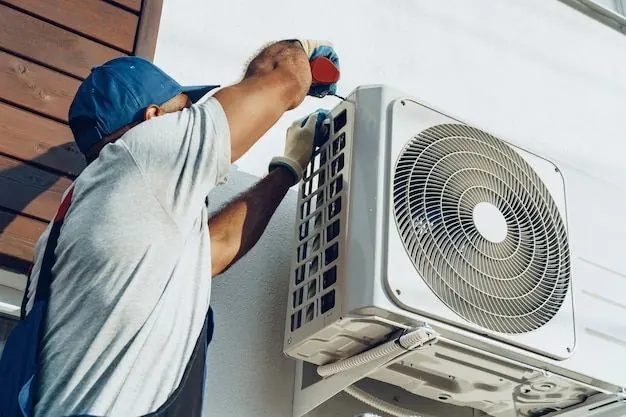
Clues worth checking before parts are ordered
Symptoms help narrow the fault, but they do not identify a component on their own. The following differences matter when discussing a repair.
Water drips from the front of the indoor unit
A blocked drain or overflowing pan can send condensate across the fascia. A displaced tray or unit that is no longer level can cause similar leakage.
Ice forms on the coil before water appears
Restricted filters, fan trouble, low airflow or refrigeration faults may ice the coil. When the ice melts, the resulting water can exceed the normal drainage path.
Wall staining near concealed pipework
Sweating chilled pipes or missing insulation can cause condensation inside the wall or trunking. The source may be separate from the indoor unit’s drain pan.
Leak occurs during storms or only with the unit off
External duct, wall-penetration and drainage routing issues may allow rainwater to enter. That requires different investigation from condensate produced by cooling.
A useful sequence for fault-finding
- 01
Switch off the air conditioner if water is threatening sockets or electrical equipment. Document where the water first appears, whether the outdoor drain flows and whether any ice was visible before the drip.
- 02
Technicians can inspect the condensate pan, drain route, pump where fitted, installation fall and insulation. Cooling airflow and coil condition should be checked if freezing or poor performance accompanies the water.
- 03
Test the system through a suitable cooling period after repair. A brief trickle from the outlet may not prove a partly obstructed drain is clear when the room is humid and condensate production increases.

Beyond the first visible symptom
Blocked drainage is not always obvious
Slime, dust and debris can partly restrict a condensate line. The system may drain at first and overflow later, especially on humid days. Proper cleaning and checking of the downstream outlet are more useful than merely wiping the indoor tray.
Why an iced coil causes a delayed leak
A frozen coil can accumulate water that has nowhere to go during thawing. The underlying cause may be airflow, a sensor or refrigeration-related; simply drying the wall will not prevent recurrence.
Check insulation and pipe routing
Cold suction pipes can attract condensation if insulation is damaged or joints are left exposed. Water stains close to line-set trunking may indicate this rather than an internal pan defect.
Information to send with your enquiry
Provide a photograph of the first wet point, how long the unit runs before dripping, whether it still cools and whether you see ice or a blinking fault indicator. Mention recent painting, building work or aircon relocation.
Deciding whether to repair
Drain cleaning or correction of a pipe route can be relatively straightforward, but a leaking coil housing, repeated icing or concealed drainage failure can require more extensive work. Treat damage to electrics as the first concern.
Questions about this problem
Is dripping indoor water a sign the AC needs gas?
Not usually. Condensate drainage and airflow problems are common causes; refrigerant issues require separate diagnosis.
Why does my air conditioner drip only at night?
Humidity, continuous runtime, an intermittent drain blockage or developing coil frost may change the amount and timing of water.
Can I keep using it with a bucket underneath?
Not advised if water could reach electrical equipment or concealed building materials. Address the cause rather than contain ongoing leakage.