
Commercial Washing Machine Downtime: Recurring Faults
In a busy laundry, diagnosing the operating cycle matters as much as replacing a failed part.
A commercial washer may complete one light load but stop midway through a full shift. It may take too long to heat water, struggle to discharge into shared drainage or trigger repeated unbalance alarms after a mounting change. These patterns are not necessarily random; they often become visible only under the machine’s real duty cycle.
For accommodation, shared-laundry and hospitality sites in Pretoria and Centurion, lost capacity affects staffing and turnaround plans. A useful breakdown report records what the machine was doing when it failed and what changed in the surrounding systems, not only the fault code displayed at the end.
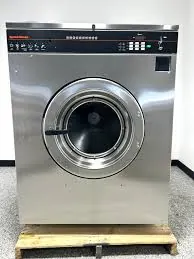
Clues worth checking before parts are ordered
Symptoms help narrow the fault, but they do not identify a component on their own. The following differences matter when discussing a repair.
Fault appears after several consecutive loads
Heat buildup, intermittent contact, limited water availability and repeated component loading may only show after sustained use. A brief empty-machine test can miss them.
Several washers drain poorly at busy times
A shared outlet, undersized drain or blocked line can be the limiting component even when each appliance has its own functioning pump.
Repeated extraction vibration alarms
Mounting stability, suspension wear, uneven loading and floor conditions affect the high forces generated by commercial spin cycles.
Machine underheats or takes too long to fill
Incoming water pressure, valves, heaters, controls and inlet filtration should be checked together. A timed programme may be disrupted by a supply constraint.
A useful sequence for fault-finding
- 01
Collect the fault log by machine, programme, time of failure and load type. Record whether other machines share the same electrical, water or drainage infrastructure and whether they show related symptoms.
- 02
Assess the appliance’s physical state, drive system, suspension, controls and supplies. Where the problem occurs only under production demand, plan testing that reflects those conditions without exposing staff to unsafe operation.
- 03
Confirm restoration with a representative programme and identify operating or maintenance actions that may prevent repeat downtime. Fault codes should be documented, not simply cleared before returning the machine to service.
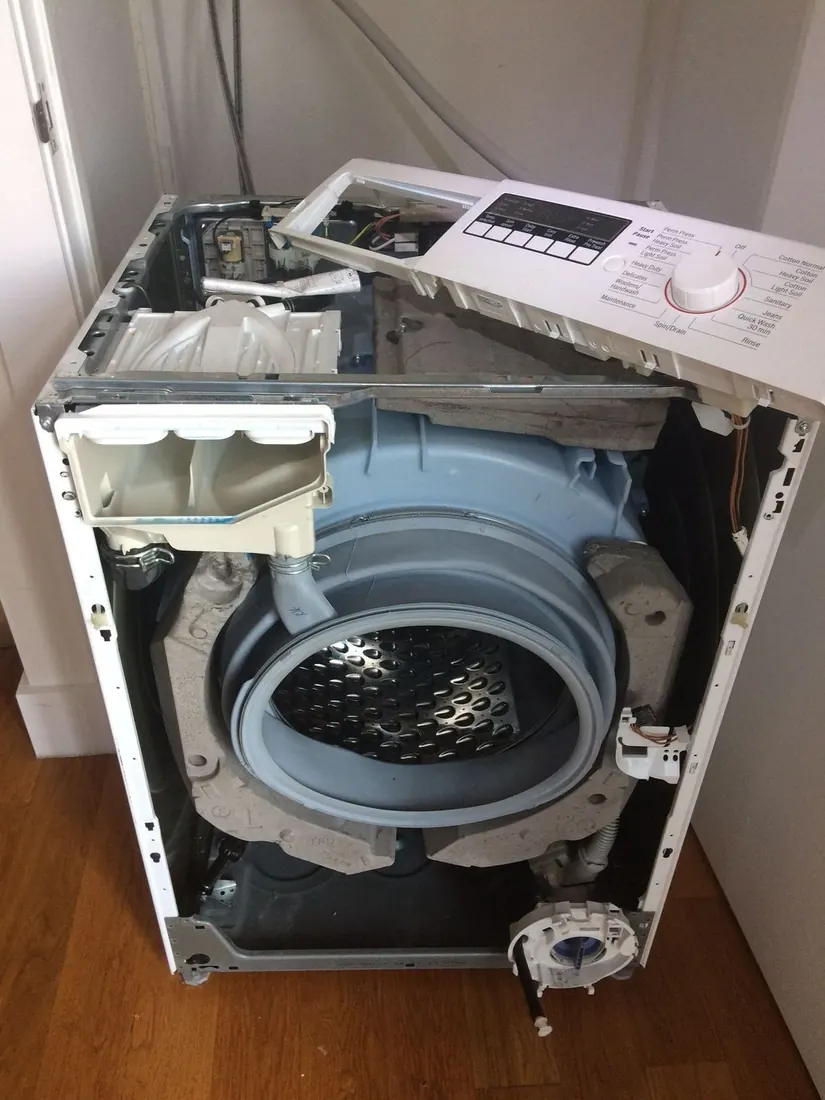
Beyond the first visible symptom
Shared utilities create shared symptoms
Multiple appliances on one drainage arrangement can overwhelm the waste route during simultaneous pump-out. Similarly, fluctuating water pressure or a stressed electrical circuit can appear as separate appliance defects.
Mechanical reliability under repeated extraction
Bearings, belts, couplings, supports and dampers see high cyclic loads. A noise that appears only at maximum speed deserves early investigation before resulting vibration causes damage to surrounding assemblies.
Maintenance records help prioritise work
Record previous parts, repeated error codes, number of cycles and unexpected stoppages. Persistent recurrence after replacing the same component should trigger a root-cause review, including how the equipment is operated.
Information to send with your enquiry
Provide facility type, washer make/model, error history, how many loads preceded failure and whether other machines share drains or power. Tell us about water interruptions and any previous repair attempts.
Deciding whether to repair
A commercial repair decision needs to include downtime cost and future reliability, not only a replacement part price. Major drum, bearing or control issues in heavily used machines may justify broader refurbishment or equipment replacement.
Questions about this problem
Why does my commercial washer work in the morning but fail later?
Sustained duty can expose heat-sensitive faults, drainage demand and supply limitations that are not apparent during a short test.
Can one blocked drain affect several washers?
Yes. Shared discharge points may become overwhelmed or obstructed when machines pump simultaneously.
What is useful in a commercial repair log?
Record the programme, exact alarm, load type, time after starting and whether an earlier reset temporarily restored operation.