
Washing Machine Door Stuck or Will Not Unlock
A locked washer door may be protecting you from water, heat or a moving drum.
When a front-loader refuses to unlock, it can be tempting to pull harder on the handle or disconnect the machine repeatedly. The lock may be operating normally because the drum still contains water, the controller has not completed its cycle or the temperature remains too high. In other cases, the lock actuator or its electrical circuit is actually faulty.
The sequence matters: did the machine drain, did a fault appear, and does it still display that a programme is active? Knowing those facts helps distinguish a safety condition from a defective latch. It also reduces the risk of a damaged door, flooded floor or hand injury.
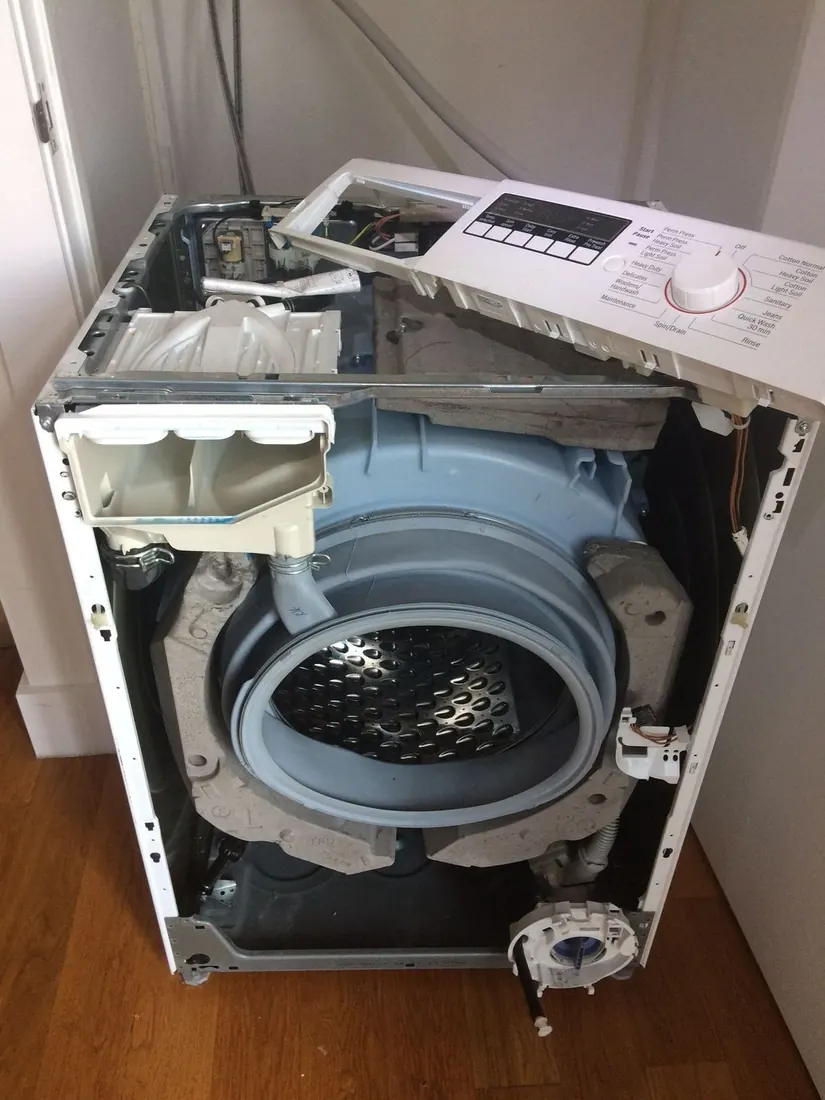
Clues worth checking before parts are ordered
Symptoms help narrow the fault, but they do not identify a component on their own. The following differences matter when discussing a repair.
Door remains locked with water clearly in the drum
Many washers prevent opening while the water level is high. The drain fault must be dealt with before the door can be safely released.
The cycle ended but the door indicator stays on
The lock may require a brief cooling or release period, or a faulty interlock signal may prevent the controller recognising an unlocked state.
Handle moves unusually freely or feels broken
Mechanical linkage, door catch or handle components may be damaged. Excessive force can turn an accessible lock repair into a door-assembly replacement.
Machine refuses to start and displays a door error
A poorly aligned strike, defective interlock or wiring/control issue may prevent the machine confirming safe closure. Repeated slamming is not a reliable fix.
A useful sequence for fault-finding
- 01
Check the manual for the normal release delay, and confirm whether water or unusual heat remains inside. If an error is present, photograph it and note the final cycle stage.
- 02
After safe isolation, qualified service can test the interlock, door catch, wiring and water-level sensing. A drain fault may need to be corrected first. Emergency-release features differ by model and should be used only as instructed.
- 03
Repair should be verified by confirming that the machine locks during operation and releases under the proper conditions. A latch that opens too easily when the drum is moving is not an acceptable result.
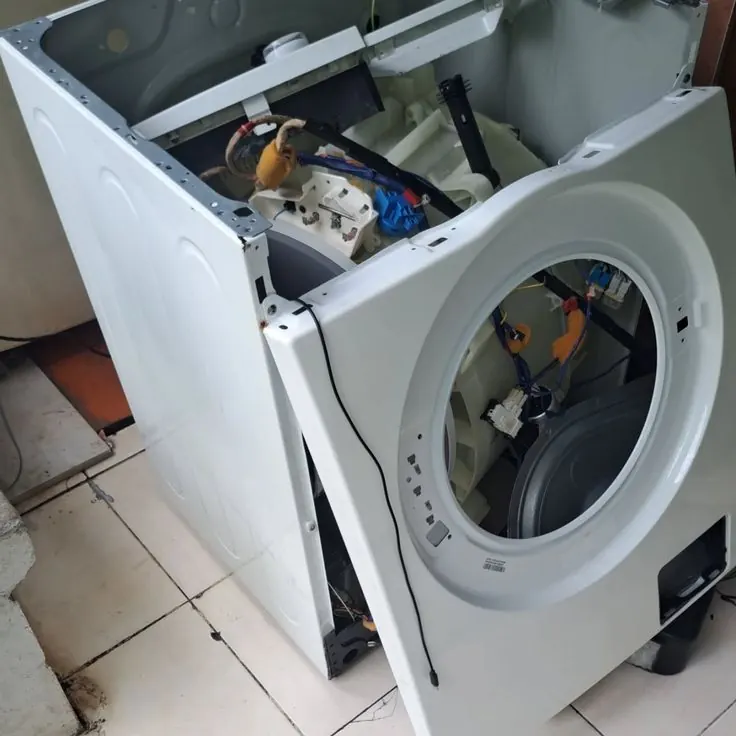
Beyond the first visible symptom
Why door locks are safety components
On front-loading machines, the door retains water and prevents access to a rotating drum. Locks may contain thermal or electromechanical components that do not release instantly. Bypassing them creates a safety hazard.
A drainage problem can look like a door fault
The control system may keep the door locked when it cannot establish that the drum is empty. Repairing only the handle will not solve this issue if the level or drainage condition remains unresolved.
Control and interlock faults overlap
A door error can involve the latch, electrical connector or control electronics. Voltage and continuity checks require relevant technical competence; arbitrary rewiring risks defeating essential protection.
Information to send with your enquiry
Share the displayed code, whether water remains, the last cycle programme, how long the machine has been off and whether the handle has been forced or damaged. A clear photograph of the model label is valuable.
Deciding whether to repair
Replacing a door catch or interlock may be reasonable when the washer is otherwise functional. Damage to the entire door frame or electronic controls changes the repair scope and cost comparison.
Questions about this problem
How long should a washer take to unlock?
Release delay varies by model and conditions. Refer to the manual; continued locking with an empty, cooled machine may require diagnosis.
Will unplugging the washer open the door?
Not always. Some locks remain engaged after power is removed, and the controller may still sense an unsafe water-level condition.
Can I replace the lock with a simple switch?
No. Door interlocks are critical safety components and must not be bypassed or replaced by improvised wiring.