
Washing Machine Not Draining: Pump or Blockage?
Water left inside the drum is a symptom, not a diagnosis of a failed pump.
A washer that stops with water inside may have been unable to discharge the water, may have failed to reach its drain programme or may be responding to a door-lock or sensor condition. The fault is frustrating because it can leave laundry trapped, but forcing the door open or pulling hoses apart can make the situation worse.
Drainage systems include a pump, filters, outlet hose and sometimes a connection to a household waste pipe. The wash programme normally checks that water leaves before proceeding to full-speed extraction. Establishing where that sequence stops helps avoid unnecessary replacement of a perfectly good motor or main controller.
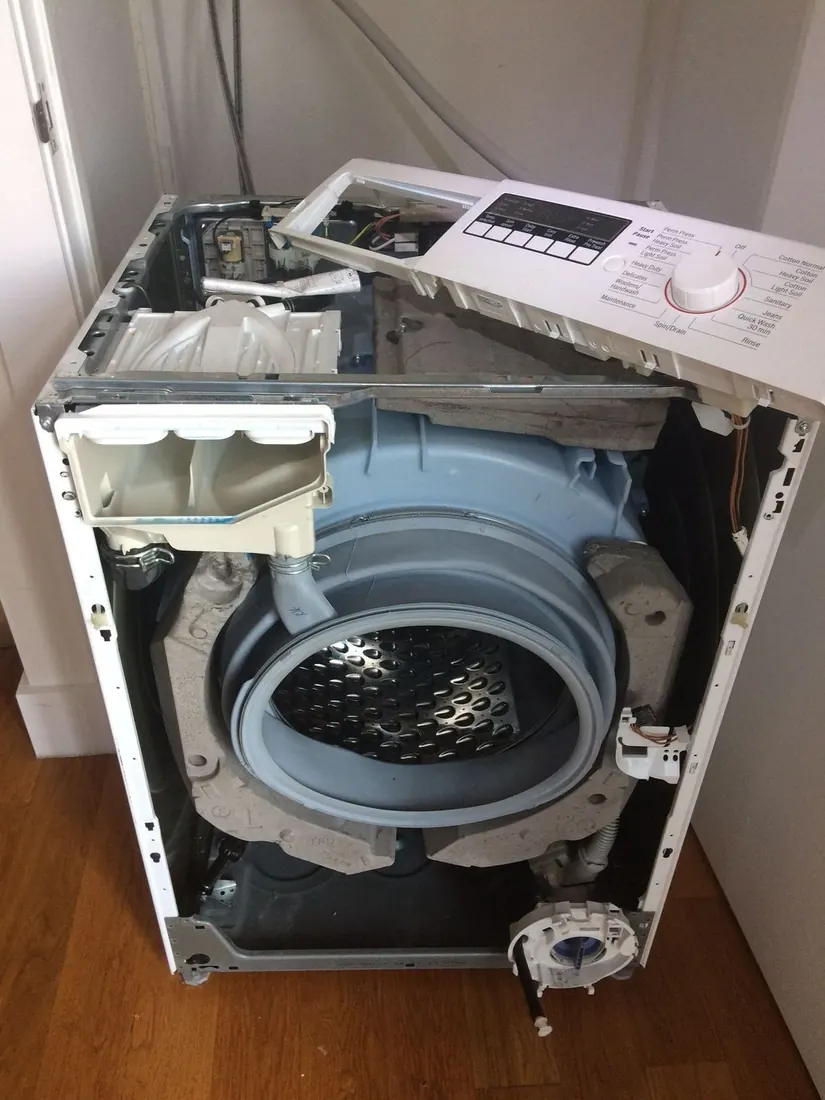
Clues worth checking before parts are ordered
Symptoms help narrow the fault, but they do not identify a component on their own. The following differences matter when discussing a repair.
Pump hums but water stays in the machine
A foreign object may jam the impeller, the outlet may be obstructed or the pump may lack mechanical performance. Water must be controlled before any accessible filter is opened.
No pump sound during a drain command
The programme may not be reaching drain, a door interlock or level sensor may be involved, or the pump may have an electrical fault. Silence alone does not prove the pump has burnt out.
Water drains slowly and spin is skipped
A partially blocked filter, kinked hose or restricted household drain can allow some flow while preventing the machine reaching its expected empty-water state.
Machine drains into a bucket but not the wall outlet
This can suggest a restriction or installation problem with the waste connection. The height and route of the hose also matter; poor installation can cause siphoning or backflow.
A useful sequence for fault-finding
- 01
Record whether the machine ever begins draining, the stage of the cycle, any displayed code and whether water can be heard moving in the waste pipe. Note recent washes of small items that may escape from pockets.
- 02
After safely isolating the machine and containing water, an accessible consumer filter may be checked only as instructed by the manufacturer. Qualified inspection can then assess the pump rotor, hoses, wiring, level sensing and control signals.
- 03
Confirm a complete drain and subsequent spin sequence after the repair. A test that only proves the pump runs briefly is incomplete because the actual programme must progress and the drain path must carry the discharge.
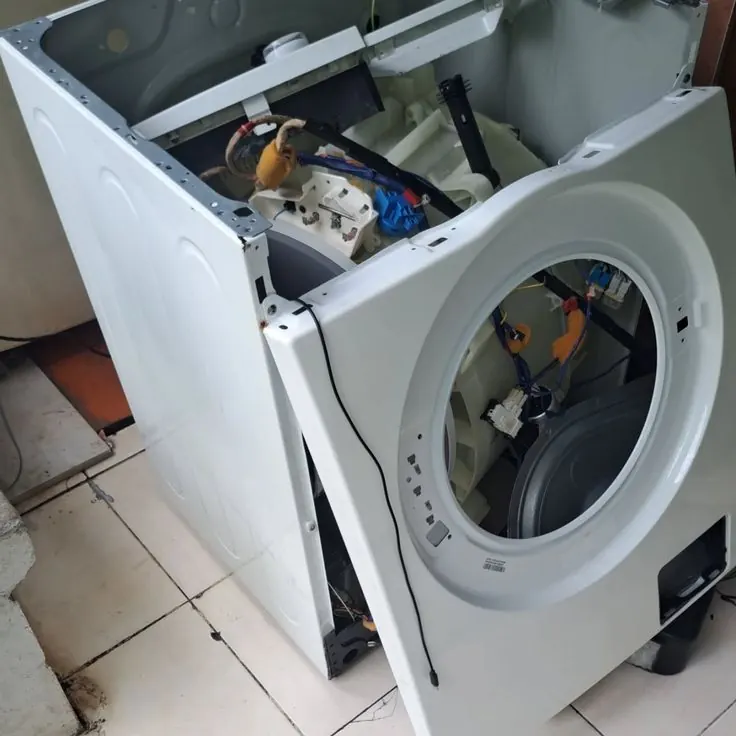
Beyond the first visible symptom
Why spin cycles depend on water removal
Most modern washers are designed to prevent high-speed extraction while water remains above an acceptable level. A wet load after a failed cycle can therefore indicate a drainage fault, not a spin motor failure.
Drain hose installation matters
A crushed hose behind a cabinet or incorrectly positioned drain connection can obstruct discharge or encourage siphoning. The manufacturer’s specified hose height and supported routing should be observed.
Pump replacement is not always the answer
A clear impeller can still have a failing motor, but a blocked coin trap or failed water-level reading can create a very similar complaint. Diagnosis should separate physical restrictions, electrical drive and programme logic.
Information to send with your enquiry
Provide a photograph of the error display and model plate, whether the pump hums, how much water remains, and whether the problem began suddenly or gradually. Tell us if water appears underneath the appliance.
Deciding whether to repair
A drainage repair is often proportionate if the rest of the washer is mechanically sound. If bearings, tub structure or electronics also have major defects, the overall condition should inform the repair-or-replace discussion.
Questions about this problem
Why does a washer refuse to spin when there is water inside?
The washer may inhibit high-speed spin because its controller has not confirmed drainage. Fixing the drain fault can restore spinning.
Is it safe to open the pump filter?
Only with the unit isolated, the water safely contained and the manufacturer’s instructions followed. Some machines hold a substantial quantity of water.
Could a blocked house drain cause this?
Yes. Waste-pipe restrictions or incorrect drain connections can prevent discharge despite a functioning appliance pump.