
Washing Machine Vibrating or Banging on Spin
The pattern of movement is a clue to whether the problem is loading, installation or mechanical wear.
All washing machines move to some degree as a heavy wet load accelerates into a spin. A machine that suddenly bangs against nearby cabinets, walks across the floor or produces a low mechanical rumble is behaving differently. Continuing high-speed use with severe movement can damage hoses, surrounding cabinetry, tub mounts or the machine itself.
A single bulky blanket causing an unbalanced load is not the same fault as a worn bearing or broken suspension component. The assessment should begin by identifying whether the problem occurs with every load, during particular speeds or after the washer was recently installed or moved.
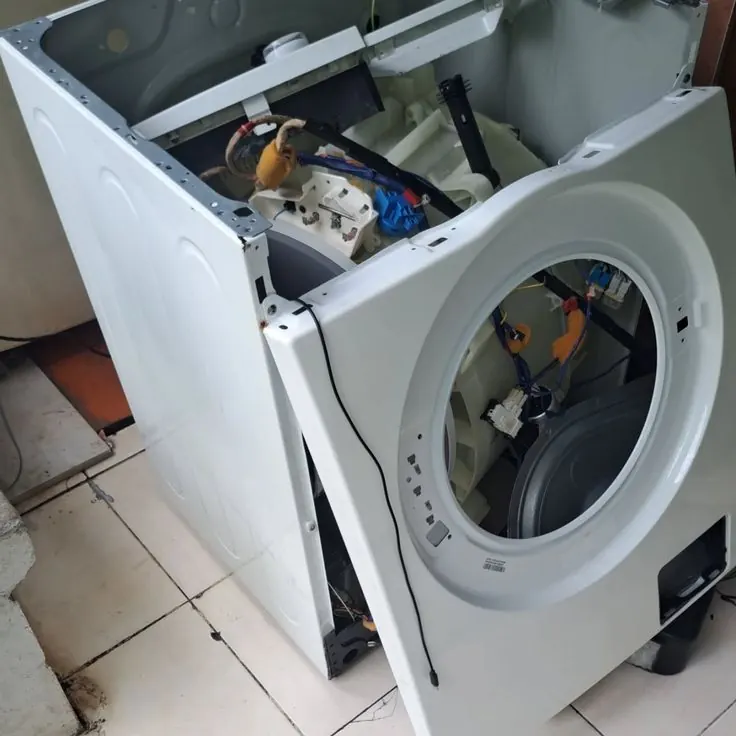
Clues worth checking before parts are ordered
Symptoms help narrow the fault, but they do not identify a component on their own. The following differences matter when discussing a repair.
Vibration started immediately after installation
Transport restraints may still be fitted, the feet may not be correctly adjusted or the supporting floor may be unsuitable. Confirm the installation instructions before assuming an internal component failed.
Banging occurs only with one heavy item
Large absorbent pieces can form an uneven load. The drum may try to redistribute the weight, but one blanket or small load can still prevent balanced extraction.
A rough growl grows louder with spin speed
Drum bearings or other rotating assemblies may be worn, particularly if there is play or water staining. This warrants mechanical inspection rather than simply levelling the feet.
Machine knocks even with ordinary mixed loads
Damaged shock absorbers, springs, counterweights or mounting points may allow excessive tub movement. The specific component depends on machine design and inspection findings.
A useful sequence for fault-finding
- 01
Check whether the machine is level and firmly supported without putting hands underneath a running unit. Note whether it has recently been moved, and whether shipping bolts were removed during installation according to the manual.
- 02
An experienced technician can examine suspension, counterweights, drum movement, bearing condition, motor drive and mounts with the machine safely isolated. The floor and cabinet clearances can also be relevant.
- 03
After correction, a controlled spin test with an appropriate load should confirm stable operation across speeds. A machine that seems stable at low speed may still exhibit severe movement near maximum extraction.
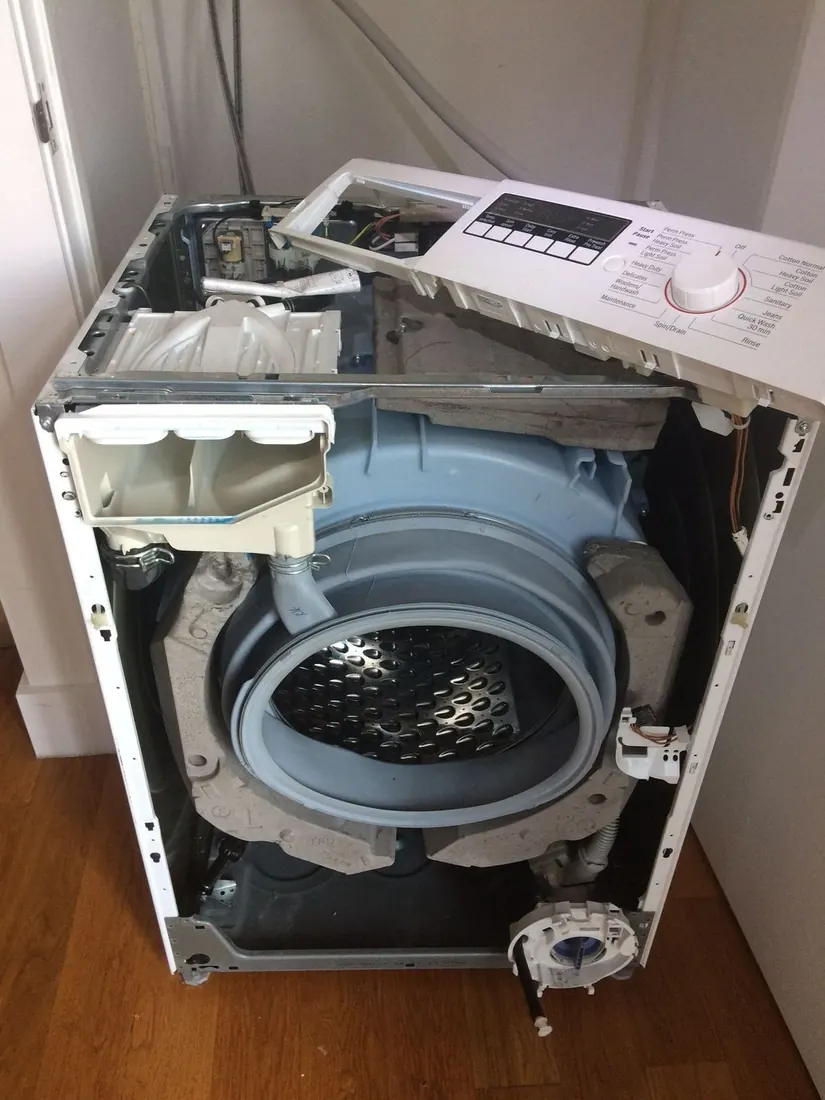
Beyond the first visible symptom
Load distribution versus mechanical breakdown
Uneven laundry can produce sudden movement even in a sound machine. The important question is whether the symptom persists with different properly sized loads, and whether a scraping or bearing noise occurs independently of load.
Suspension and damping
Shock absorbers and springs are designed to manage changing forces as the drum accelerates. A weak or detached component may allow a normal load to produce uncontrolled tub movement; merely adding weight to the cabinet is not a repair.
Consequences for water and electrical connections
A walking washer can strain hoses and connectors. Inspect surrounding leak risks after heavy movement, and keep the machine out of use when it moves far enough to threaten its supply or drain connections.
Information to send with your enquiry
Explain whether the noise is a bang, scrape or deep rumble, when it starts, whether the machine was moved and if a video can capture the movement from a safe distance. Include the model and approximate machine age.
Deciding whether to repair
Suspension or mounting repairs may be economical, but a major bearing or damaged tub assembly can be costly depending on design and parts supply. A proper mechanical assessment clarifies whether continued repair makes sense.
Questions about this problem
Can I fix vibration by putting a mat under the washer?
A suitable floor and correct levelling help, but a mat cannot repair broken suspension, loose counterweights or failing bearings.
Could forgotten transport bolts cause banging?
Yes. Machines recently installed with restraints left fitted can suffer severe movement and damage. Consult the manufacturer instructions.
Is a loud rumble the same as an unbalanced load?
Not necessarily. A persistent mechanical rumble that increases with drum speed may indicate bearing or rotating-component wear.