
Office fridge struggles at midday
Repeated door opening and warm packed meals can add load, but persistent warming indicates possible weak circulation, defective sealing or inadequate condenser ventilation.
In Silverton, household fridges and small workplace refrigerators may be used for different purposes. We distinguish the cooling demands of a domestic food cabinet from a unit accessed repeatedly in a staff kitchen before investigating faults in compressors, fans or defrost controls.
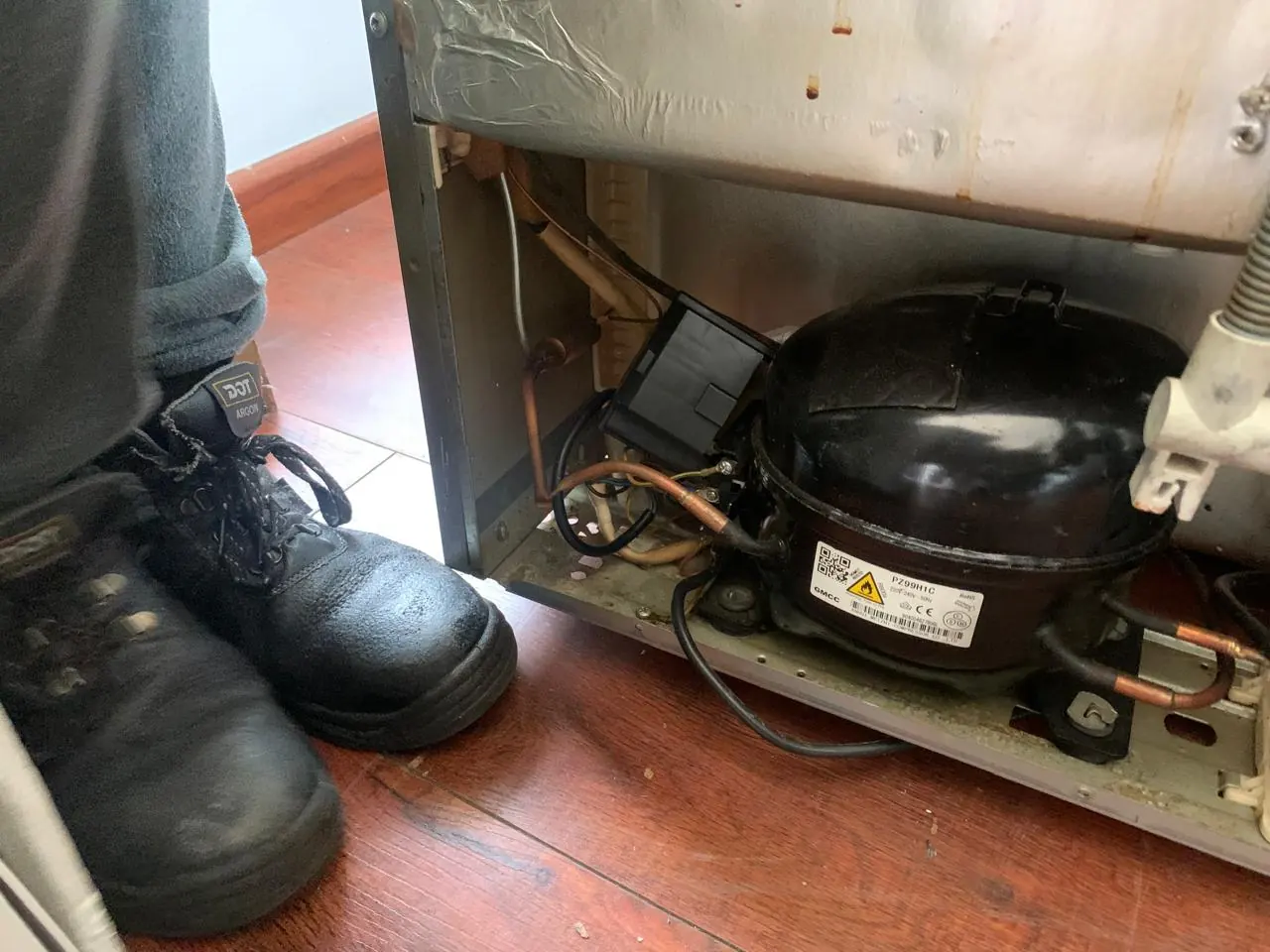
Repeated door opening and warm packed meals can add load, but persistent warming indicates possible weak circulation, defective sealing or inadequate condenser ventilation.
Supply and start devices require checks appropriate to the specific compressor design. A functioning display does not prove the motor circuit is healthy.
A blocked defrost drain, displaced evaporation tray or plumbed water fitting can produce leaks. We identify where the liquid begins instead of calling all water a refrigerant fault.
A door held open by a basket or gasket leak allows moist air to freeze. We examine closing geometry and defrost operation before judging whether a heater has failed.
Load pattern, power history, frost shape and drainage route provide four different clues. A meaningful inspection checks each suspected subsystem independently and observes actual compartment temperature.
Where the fault lies in drainage or door alignment, repairs need not involve the cooling circuit. Electrical or sealed-system work is recommended only after suitable confirmation, with clear testing afterward.
Send the make, model, whether it serves a home or workplace, approximate door use and any recent electrical interruptions. State if food or products urgently need safe alternative storage.
Do not open powered panels or sealed refrigeration circuits. If overheating, sparking or smoke occurs, disconnect only when safe and seek qualified help.
Identify the refrigerator model and the temperature or fault behaviour without dismantling the unit.
Enter your Silverton address and an accessible contact number in the editable booking form.
We review your enquiry, confirm service availability and discuss appropriate diagnosis before any parts or repair work is approved.
For a shared workplace refrigerator, compare the temperature before staff arrive with the temperature at the busiest opening period. That history indicates whether the problem follows loading or persists even when untouched.
Move perishable food to working refrigeration if cooling fails. After repair, verify temperatures under ordinary use.
A small domestic fridge used by several staff members may have to cool numerous lunches arriving at once. That demand can expose weak ventilation or an aging door seal, but it does not prove the compressor is defective. We look for whether the fresh-food compartment returns to target temperature once the doors stay closed, and whether the freezer is behaving differently. If a unit trips an RCD or circuit breaker, it must remain off until electrical safety is established; repeated resets risk worsening damage. When the refrigerator stores temperature-sensitive goods, arrange alternative cold storage while the fault is assessed.
Repeated door opening and warm packed meals can add load, but persistent warming indicates possible weak circulation, defective sealing or inadequate condenser ventilation.
Supply and start devices require checks appropriate to the specific compressor design. A functioning display does not prove the motor circuit is healthy. We confirm suitable appointment availability for your address before attendance.
Send the make, model, whether it serves a home or workplace, approximate door use and any recent electrical interruptions. State if food or products urgently need safe alternative storage. Avoid opening panels or refrigerant pipes to take photographs.
Tell us the model, symptoms and exact location. We will confirm the next available service option.