
Built-in fridge alarms when cabinet doors close
Restricted plinth airflow, blocked condenser exhaust or integrated door alignment can affect performance and produce warnings. We compare actual temperatures with installation guidance.
Woodhill fridge and fridge-freezer enquiries sometimes require careful handling of integrated cabinetry, water-fed dispensers and electronic control panels. We review the full model details and access method before disconnecting fitted components.
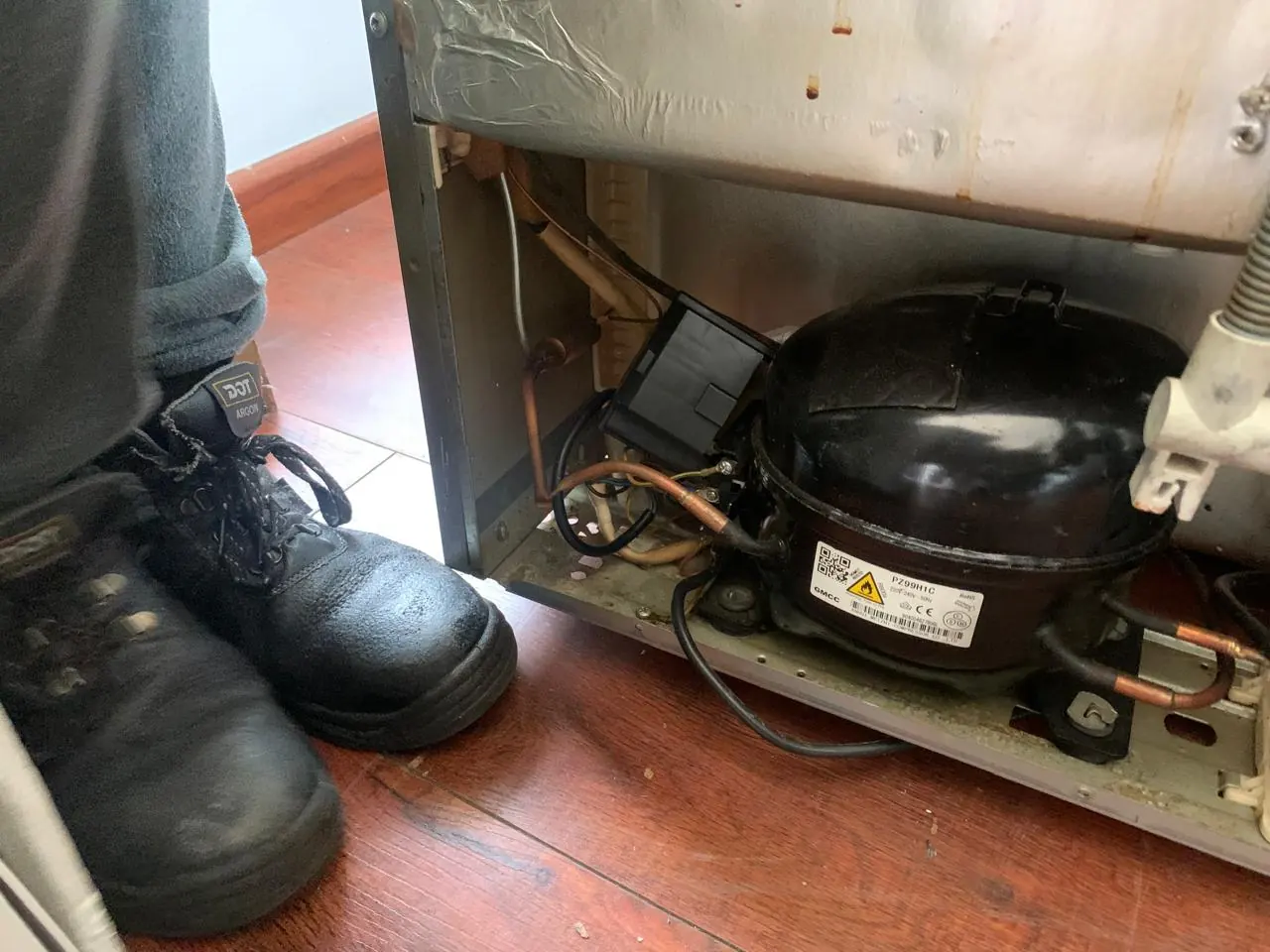
Restricted plinth airflow, blocked condenser exhaust or integrated door alignment can affect performance and produce warnings. We compare actual temperatures with installation guidance.
A jammed chute, frozen feed section or failed dispensing actuator can affect delivery even when the freezer remains cold.
Warm-air ingress, door geometry or improper defrost drainage can produce wet surfaces. We examine moisture paths separately from compressor operation.
Related sensor and communication errors can be caused by wiring or peripheral devices. The controller should not be replaced before appropriate model-specific testing.
We distinguish appliance failure from cabinetry and water-supply problems. Electronic warning messages are reviewed alongside measured cooling performance, not treated as instructions to replace the most expensive board.
The corrective work may involve ventilation, plumbing, a dispenser component or refrigeration controls; safe reintegration into the cabinetry is part of checking a completed job.
Provide the complete model suffix, appliance and kitchen fitting type, displayed alarm numbers, and details of the water shut-off before a visit.
Do not open powered panels or sealed refrigeration circuits. If overheating, sparking or smoke occurs, disconnect only when safe and seek qualified help.
Identify the refrigerator model and the temperature or fault behaviour without dismantling the unit.
Enter your Woodhill address and an accessible contact number in the editable booking form.
We review your enquiry, confirm service availability and discuss appropriate diagnosis before any parts or repair work is approved.
Electronic alarms, ice-maker water circuits and built-in ventilation may each require a separate repair path. Recording which function still works can help avoid unnecessary component changes.
Move perishable food to working refrigeration if cooling fails. After repair, verify temperatures under ordinary use.
Built-in refrigerators can be attached to furniture panels and may have concealed water lines or cable routes. Taking them out without a plan risks scratching flooring, pulling tubing or damaging hinges. Before a technician moves the unit, we establish its installation method and where the electrical and water isolators are located. A cooling complaint can stem from ventilation restrictions even when major mechanical components are serviceable. Conversely, a dispenser fault can exist while the refrigeration system remains normal. Each subsystem should be proved faulty on its own merits before replacement.
Restricted plinth airflow, blocked condenser exhaust or integrated door alignment can affect performance and produce warnings. We compare actual temperatures with installation guidance.
A jammed chute, frozen feed section or failed dispensing actuator can affect delivery even when the freezer remains cold. We confirm suitable appointment availability for your address before attendance.
Provide the complete model suffix, appliance and kitchen fitting type, displayed alarm numbers, and details of the water shut-off before a visit. Avoid opening panels or refrigerant pipes to take photographs.
Tell us the model, symptoms and exact location. We will confirm the next available service option.