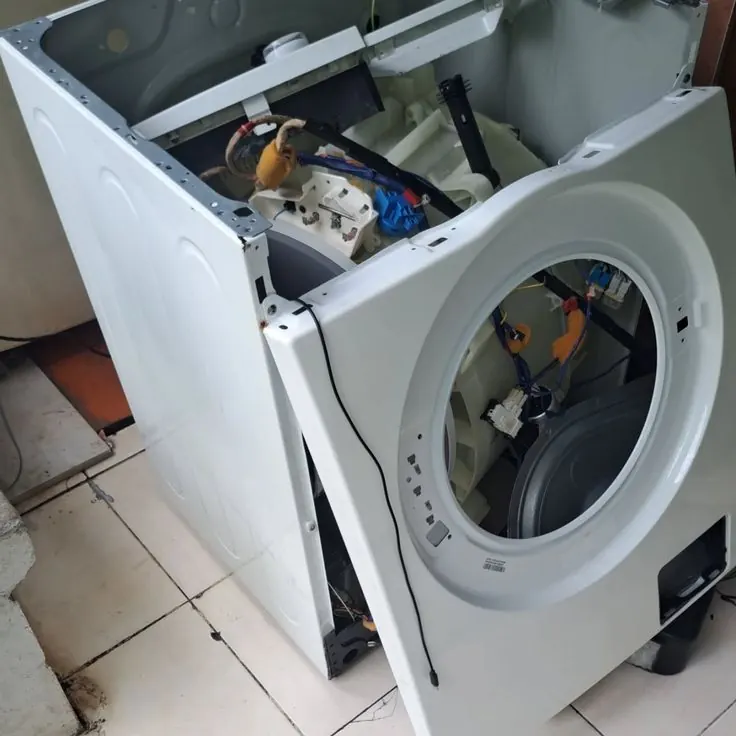
Repeated unbalanced-spin errors
A washer that slows down, rearranges the load and tries again may be protecting itself from an unstable drum. Uneven floors, damaged feet, worn dampers and absorbent items gathered on one side can produce similar symptoms.
We check the appliance level, suspension response and drum movement before judging whether internal parts need replacement. A load-specific issue should not automatically be quoted as a motor failure.
Before the visit: Note whether the fault happens with sheets, towels or a small mixed load.
Excessive vibration on tiled flooring
Loud movement during a high-speed spin is not always evidence of a failed drum bearing. Uneven feet, slippery flooring, poor load distribution, shipping bolts left in a recently installed machine and failed shock absorbers can all contribute.
A repeatable unloaded and loaded observation helps separate installation causes from mechanical wear. We also look for cabinet contact and evidence that the appliance has been walking from its position.
Before the visit: Stop the cycle if the unit is striking cabinetry or moving towards a hose.
Noisy spin after years of reliable use
A new rumble in an established machine may indicate bearings, worn suspension, pulley wear or a foreign object. The sound often becomes more pronounced as drum speed rises.
We compare drum movement and drive response and consider the cost of repair relative to the machine condition. Bearing work varies considerably between sealed and serviceable tub designs.
Before the visit: Tell us the approximate age and model; do not assume all machines are economically repairable.