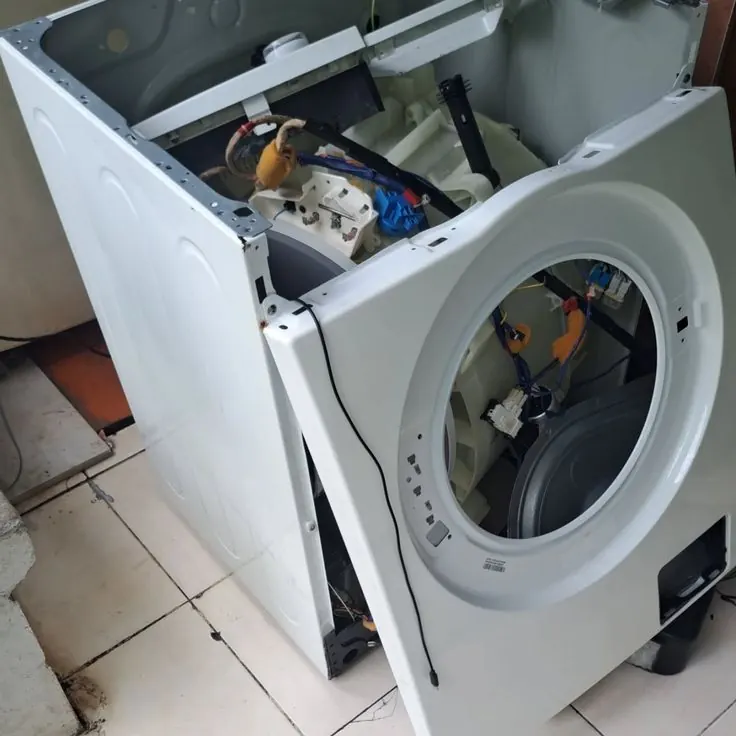
We investigate faults around Moreleta Park according to the cycle stage and the way the washer is installed. For example, repeated unbalanced-spin errors is a different diagnostic path from excessive vibration on tiled flooring; one may involve a water or drive component, while the other requires checking how the appliance responds during its operating sequence. The fault patterns below explain the distinctions we look for before recommending work.
Repeated unbalanced-spin errors
A washer that slows down, rearranges the load and tries again may be protecting itself from an unstable drum. Uneven floors, damaged feet, worn dampers and absorbent items gathered on one side can produce similar symptoms.
We check the appliance level, suspension response and drum movement before judging whether internal parts need replacement. A load-specific issue should not automatically be quoted as a motor failure.
While arranging service: Note whether the fault happens with sheets, towels or a small mixed load.
Excessive vibration on tiled flooring
Loud movement during a high-speed spin is not always evidence of a failed drum bearing. Uneven feet, slippery flooring, poor load distribution, shipping bolts left in a recently installed machine and failed shock absorbers can all contribute.
A repeatable unloaded and loaded observation helps separate installation causes from mechanical wear. We also look for cabinet contact and evidence that the appliance has been walking from its position.
While arranging service: Stop the cycle if the unit is striking cabinetry or moving towards a hose.
Repeated errors with bulky bedding
Duvets and heavy blankets can absorb considerable water and become difficult to balance in a domestic drum. A washer may pause, reduce the spin speed or abort spinning to prevent excessive movement.
We check whether ordinary loads run correctly and compare the item against the manufacturer load instructions. A load-capacity issue needs different advice from a failed damper or motor.
While arranging service: Avoid forcing a larger item into the drum than the stated capacity allows.
Intermittent door-lock error
The machine may show a door error even though the door seems shut. Misalignment, worn catches, damaged interlocks and wiring faults can each prevent a cycle from starting.
We inspect the latch movement and interlock response with power safely controlled. Bypassing the device is unsafe because the lock protects against moving parts and hot water.
While arranging service: Do not tape the latch or defeat any door-lock safety mechanism.