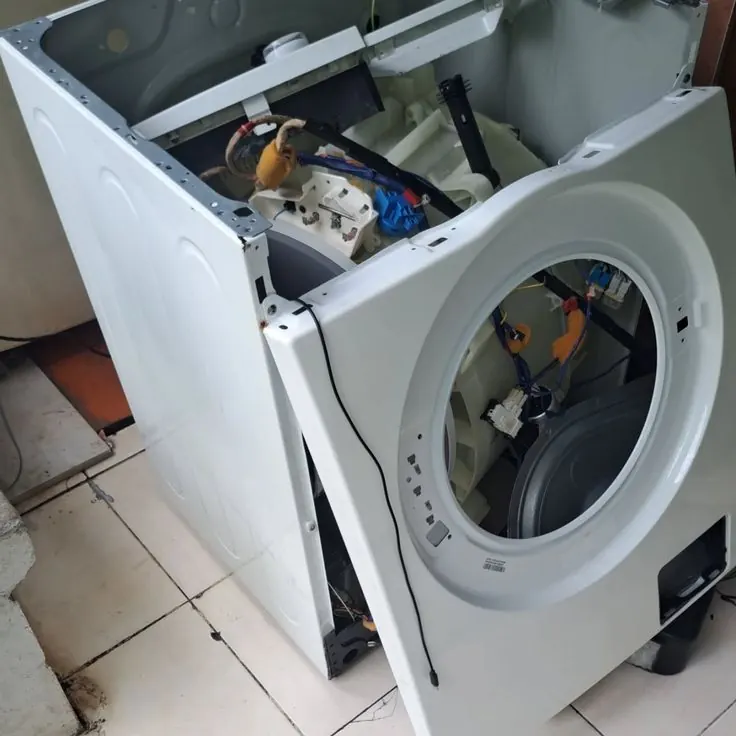
We investigate faults around Die Hoewes according to the cycle stage and the way the washer is installed. For example, water backs up into a laundry sink is a different diagnostic path from water level behaves unpredictably; one may involve a water or drive component, while the other requires checking how the appliance responds during its operating sequence. The fault patterns below explain the distinctions we look for before recommending work.
Water backs up into a laundry sink
A washer that drains into a plumbing system with inadequate capacity can push water back into a sink or overflow a standpipe. The pump can be fully functional while the building drain is blocked.
We check where discharge goes and whether the blockage is downstream of the appliance. Where the defect is plumbing-related, the appropriate drainage work must be identified rather than replacing washer parts.
While arranging service: Stop repeated high-volume drains until the overflow is addressed.
Water level behaves unpredictably
Repeated filling or early draining may involve a pressure-sensing tube, water-level sensor, inlet-valve problem or incorrect drain-hose positioning. The sequence of actions helps narrow down the cause.
We examine hose arrangement and water-level response before proposing a controller repair. A siphoning drain hose can make a good machine appear to have a serious electronic fault.
While arranging service: Note whether water leaves the drum while the machine is still filling.
Rust marks or water below the cabinet
Water near the cabinet base may indicate leaks from a pump, internal hose, tub seal or damaged casing, depending on the design. Corrosion can be a consequence of a long-term leak rather than the primary failure.
The underside and hose joints require careful inspection with the appliance safely isolated. Surface rust alone does not identify the failed part, and we examine whether the chassis remains safe to use.
While arranging service: Disconnect power if water is close to electrical components.
Drain hose dislodges during operation
Movement from a high-speed spin or poor hose positioning can pull a drain pipe out of a standpipe and flood the floor. This is a plumbing and installation issue, even if the washer itself functions normally.
We assess hose retention, standpipe height, machine stability and the drain connection before recommending any component. A secure installation reduces the risk of repeat flooding.
While arranging service: Turn off the machine and isolate water if the hose has come loose.