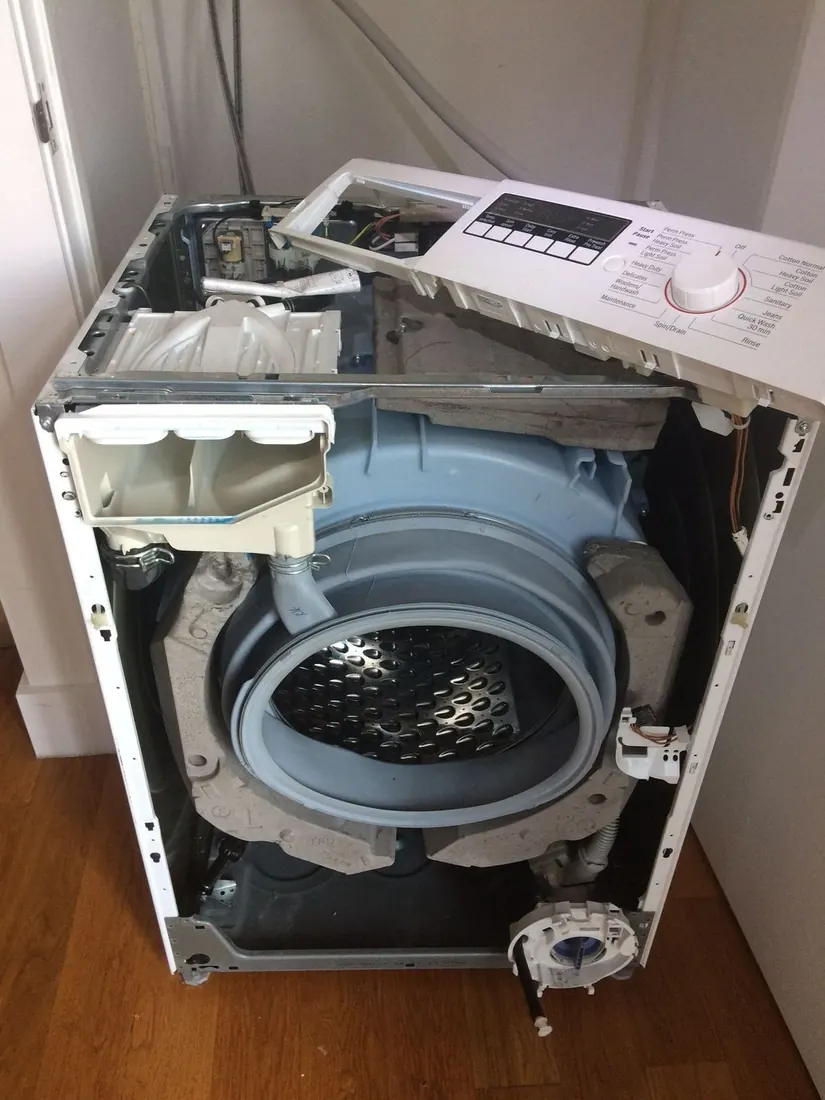
We investigate faults around Brooklyn according to the cycle stage and the way the washer is installed. For example, water backs up into a laundry sink is a different diagnostic path from water escaping at the door; one may involve a water or drive component, while the other requires checking how the appliance responds during its operating sequence. The fault patterns below explain the distinctions we look for before recommending work.
Water backs up into a laundry sink
A washer that drains into a plumbing system with inadequate capacity can push water back into a sink or overflow a standpipe. The pump can be fully functional while the building drain is blocked.
We check where discharge goes and whether the blockage is downstream of the appliance. Where the defect is plumbing-related, the appropriate drainage work must be identified rather than replacing washer parts.
While arranging service: Stop repeated high-volume drains until the overflow is addressed.
Water escaping at the door
A puddle under a front-loader may come from a split door gasket, soap residue on the seal, an overloaded drum or water travelling from a hose above the opening. The wettest visible location is not always the source.
A controlled fill and wash observation helps trace the leak to its entry point. Replacing the seal is useful only if it is damaged, warped or no longer seating correctly.
While arranging service: Stop use if water reaches a socket or electrical connection.
A grinding noise when the drum turns
A rubbing, rumbling or grinding drum can indicate foreign objects between tubs, worn bearings, a damaged pulley or a motor problem. A sound only during spin has different implications from one heard during slow hand rotation.
We assess drum play, the drive system and the timing of the sound. Early inspection can prevent a small obstruction from damaging the drum or outer tub.
While arranging service: Do not keep running noisy high-speed cycles to test whether it improves.
Residue on laundry after washing
Grey marks or detergent streaks may stem from poor rinsing, overloads, dispenser deposits or an insufficient water level. Some stains result from the garments themselves rather than an appliance defect.
We review detergent, programme, fabric mix and draining before investigating sensors or water valves. The goal is to identify a repeatable machine issue, not to sell parts for a detergent problem.
While arranging service: Record the fabric type and programme on which residue appears.