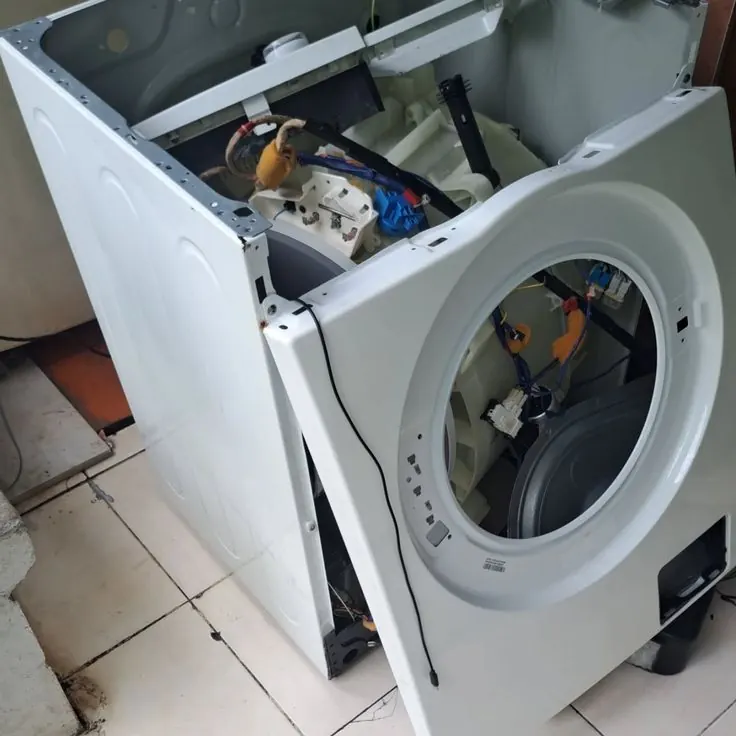
We investigate faults around Hatfield according to the cycle stage and the way the washer is installed. For example, too much foam and poor rinsing is a different diagnostic path from detergent drawer overflows; one may involve a water or drive component, while the other requires checking how the appliance responds during its operating sequence. The fault patterns below explain the distinctions we look for before recommending work.
Too much foam and poor rinsing
Excessive suds may follow incorrect detergent type, high dosage, poor draining or accumulated product in the system. Foam can interfere with water-level sensing and extend or interrupt cycles.
We check the drainage and dosing conditions before treating the sensor as defective. A change in product or dosage can resolve some cases; persistent faults still require investigation.
While arranging service: Share the detergent type and recent changes when booking.
Detergent drawer overflows
Foam or water escaping from a dispenser can be caused by clogged drawer jets, detergent build-up, excessive dosing or an inlet spray fault. The tray may look clean while the water passages above it are obstructed.
Cleaning and checking the drawer path is a sensible first diagnostic step. If inlet distribution is abnormal, the relevant valve and channel are assessed rather than replacing the drawer alone.
While arranging service: Record whether overflow occurs on initial fill or during a rinse.
Unpleasant smell after short washes
Persistent odour can build up when cool quick programmes leave detergent and moisture inside the door fold, dispenser and drain system. Bad smells may also be associated with standing water or drainage problems.
We identify whether the cause is hygiene, restricted draining or a damaged seal before recommending parts. Correct dosing and an appropriate maintenance programme may be part of the solution.
While arranging service: Leave the door ajar when appropriate and follow the manufacturer cleaning guidance.
Tap or hose connection leaks
A leak behind the washing machine may originate at the tap, inlet connector, pressure hose or drain outlet rather than inside the appliance. A small drip can travel along a hose and become visible far from the source.
We distinguish plumbing-side defects from appliance-side defects, test connectors and inspect hose routing. Replacing an internal pump cannot solve a leaking stopcock.
While arranging service: Turn off the water supply if there is active uncontrolled leaking.