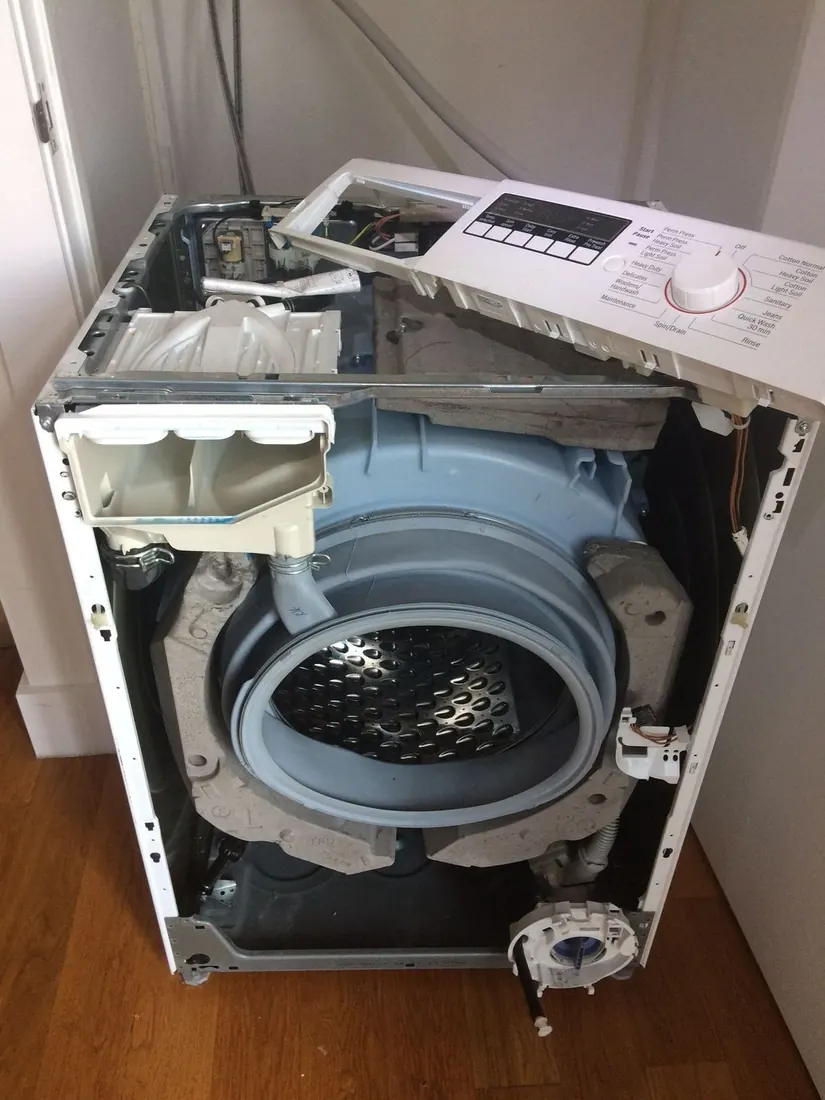
We investigate faults around Sunnyside according to the cycle stage and the way the washer is installed. For example, machine fills very slowly is a different diagnostic path from rattling after installation or relocation; one may involve a water or drive component, while the other requires checking how the appliance responds during its operating sequence. The fault patterns below explain the distinctions we look for before recommending work.
Machine fills very slowly
A washer can fill slowly because of low incoming water pressure, a clogged inlet screen, a kinked hose or a water valve that no longer opens properly. The symptom may be more noticeable during repeated rinses.
We compare the available supply with the machine inlet behaviour before deciding on a valve repair. A weak property supply should not be misdiagnosed as a defective controller.
While arranging service: Check whether other taps also have reduced flow, without dismantling the machine.
Rattling after installation or relocation
An appliance moved into a new laundry space may rattle because it is not level, has a bent foot, is touching a wall, or was transported without the appropriate protection. Internal suspension damage must also be considered.
We review the placement and recent move history before dismantling assemblies. Fixing clearance and levelling can solve some noises without parts; damaged suspension still needs professional attention.
While arranging service: Check whether the noise began immediately after moving the machine.
Dispenser remains full of powder
Powder sitting in the tray can be caused by low flow, obstructed water jets, damp detergent clumping or an incorrectly seated drawer. The machine may still finish a programme while cleaning poorly.
We compare the water distribution with the installed supply and the selected programme. Drawer hygiene and inlet problems should be excluded before blaming the main control board.
While arranging service: Photograph the dispenser after a cycle if the fault is intermittent.
A grinding noise when the drum turns
A rubbing, rumbling or grinding drum can indicate foreign objects between tubs, worn bearings, a damaged pulley or a motor problem. A sound only during spin has different implications from one heard during slow hand rotation.
We assess drum play, the drive system and the timing of the sound. Early inspection can prevent a small obstruction from damaging the drum or outer tub.
While arranging service: Do not keep running noisy high-speed cycles to test whether it improves.