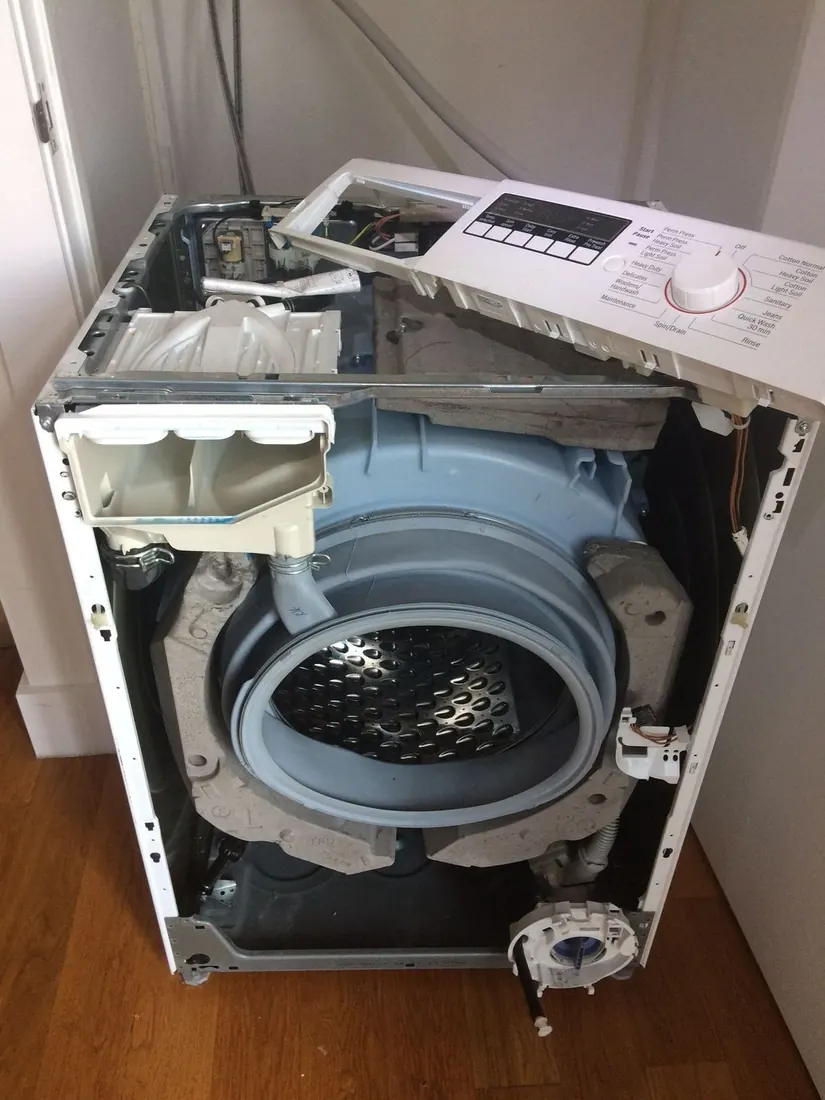
We investigate faults around Sinoville according to the cycle stage and the way the washer is installed. For example, cycle ends but clothing remains soaking wet is a different diagnostic path from repeated errors with bulky bedding; one may involve a water or drive component, while the other requires checking how the appliance responds during its operating sequence. The fault patterns below explain the distinctions we look for before recommending work.
Cycle ends but clothing remains soaking wet
Wet laundry after a completed cycle can result from interrupted draining, low spin speed selection, imbalance protection or a failing drive component. A completed timer display does not prove that full-speed extraction happened.
We ask about the load size, selected programme and whether the machine attempted a final spin. This prevents a drainage or sensor issue from being mistaken for a faulty motor.
While arranging service: Check the programme setting and avoid repeated overloaded spin attempts.
Repeated errors with bulky bedding
Duvets and heavy blankets can absorb considerable water and become difficult to balance in a domestic drum. A washer may pause, reduce the spin speed or abort spinning to prevent excessive movement.
We check whether ordinary loads run correctly and compare the item against the manufacturer load instructions. A load-capacity issue needs different advice from a failed damper or motor.
While arranging service: Avoid forcing a larger item into the drum than the stated capacity allows.
High-pitched noise near the pump
A sharp whine when the machine empties can indicate a restricted pump impeller or motor wear. The sound may change as the water level falls and should be differentiated from a spinning-drum bearing noise.
We assess the pump path and impeller condition while inspecting for trapped debris. A pump replacement should be based on function and testing, not on noise alone.
While arranging service: Do not put fingers or tools into an energised pump compartment.
Detergent drawer overflows
Foam or water escaping from a dispenser can be caused by clogged drawer jets, detergent build-up, excessive dosing or an inlet spray fault. The tray may look clean while the water passages above it are obstructed.
Cleaning and checking the drawer path is a sensible first diagnostic step. If inlet distribution is abnormal, the relevant valve and channel are assessed rather than replacing the drawer alone.
While arranging service: Record whether overflow occurs on initial fill or during a rinse.